Loading...

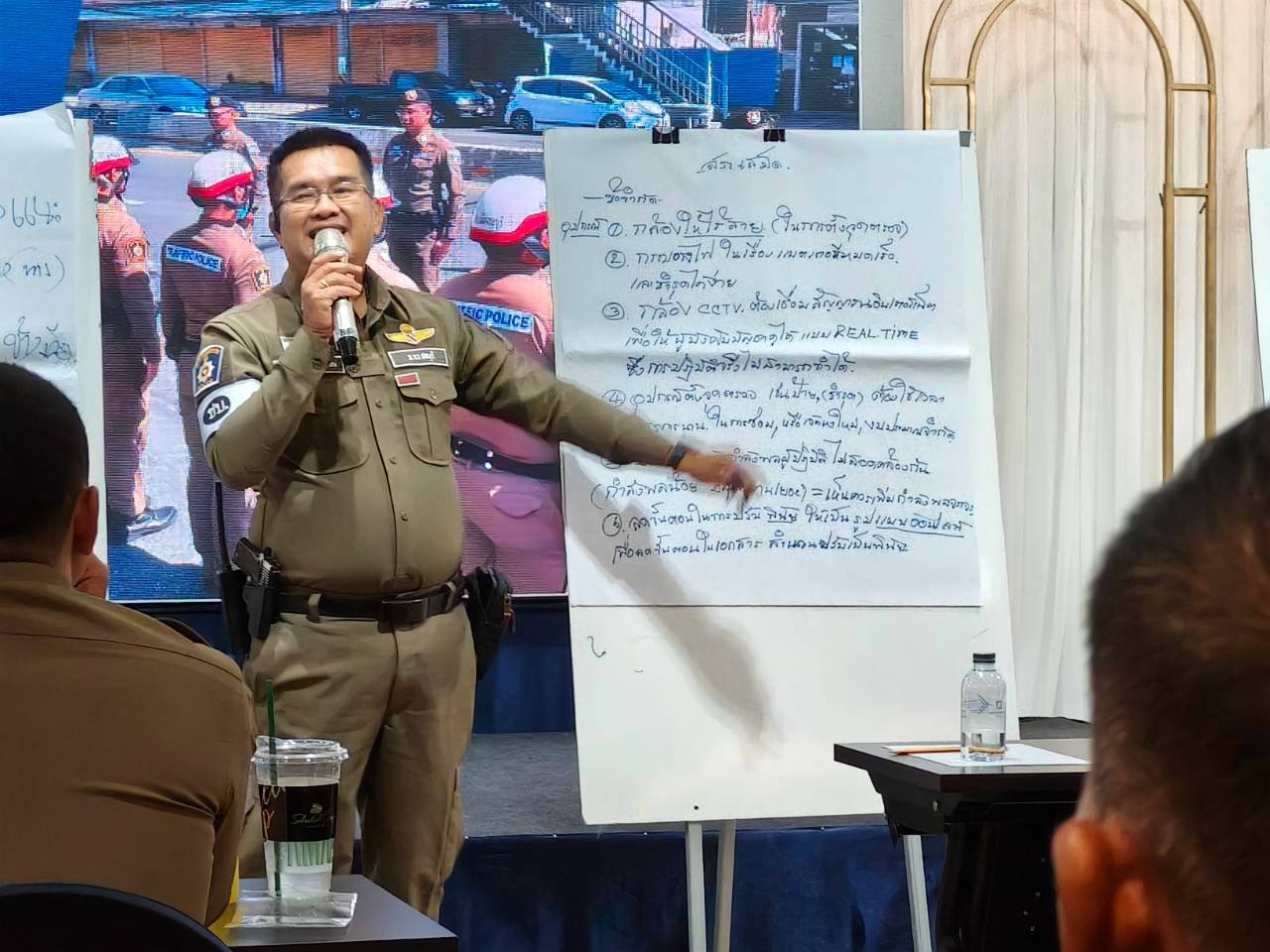
AIP Foundation, together with Sor Or Jor Ror (Provincial Road Safety Technical Support), Chonburi Provincial Police, Muang Chonburi Police Station, the Department of Disaster Prevention and Mitigation (DDPM), Burapha University, and Chonburi Municipality/Chonburi Provincial Administrative Organization (PAO), brought together law enforcement and local road safety partners to strengthen efforts to improve motorcycle helmet use in Chonburi as part of the Safeguard – Helmet Advocacy Initiative in Thailand.
The workshop aimed to develop a joint operational plan and Standard Operating Procedures (SOPs) for integrated law enforcement, while strengthening the capacity of traffic police and local networks through practical training on checkpoint setup, enforcement and reporting. It focused on building a model of positive and integrated enforcement that could be adapted and expanded to other districts and provinces.
Addressing a Critical Road Safety Challenge
Chonburi is one of Thailand’s high-risk provinces for road injuries, with high traffic volumes, a large motorcycle population, and significant tourism and industrial activity. Non-use of motorcycle helmets remains a major road safety concern and contributes to serious head injuries and deaths.
Law enforcement officers play a critical role in changing road user behaviour. Strengthening their ability to carry out enforcement that is consistent, practical and focused on encouraging compliance can help create safer roads for motorcyclists and communities across Chonburi.
Muang Chonburi was therefore selected as the project “sandbox” — a pilot area where partners could develop and test an integrated approach that could eventually be replicated in other areas.
From Training to Action
During the activity, participants strengthened their understanding of the local road injury situation and explored positive enforcement, an approach that emphasizes motivation and encouraging compliance rather than relying solely on fines. They also developed practical skills in setting up checkpoints according to standardized SOPs and police orders, coordinating integrated operations, and reporting and monitoring enforcement activities.
The training brought together participants from police, public health, local government and university networks, reflecting the importance of multi-sector collaboration in addressing road safety challenges.
The Chonburi sandbox represents more than a training opportunity — it is a chance to test what works, strengthen collaboration and turn lessons from the field into a model for action. By combining positive enforcement, multi-sector cooperation and innovative technology, partners are working toward a future where helmet use becomes the norm. The lessons generated through this pilot can help inspire and inform road safety efforts in communities across Thailand and beyond.
Together, we can build a world where every person can move safely, fairly, and freely. Join us in delivering sustainable and equitable mobility to communities around the world by donating today.




Stay informed with our latest mobility highlights every month!