Loading...

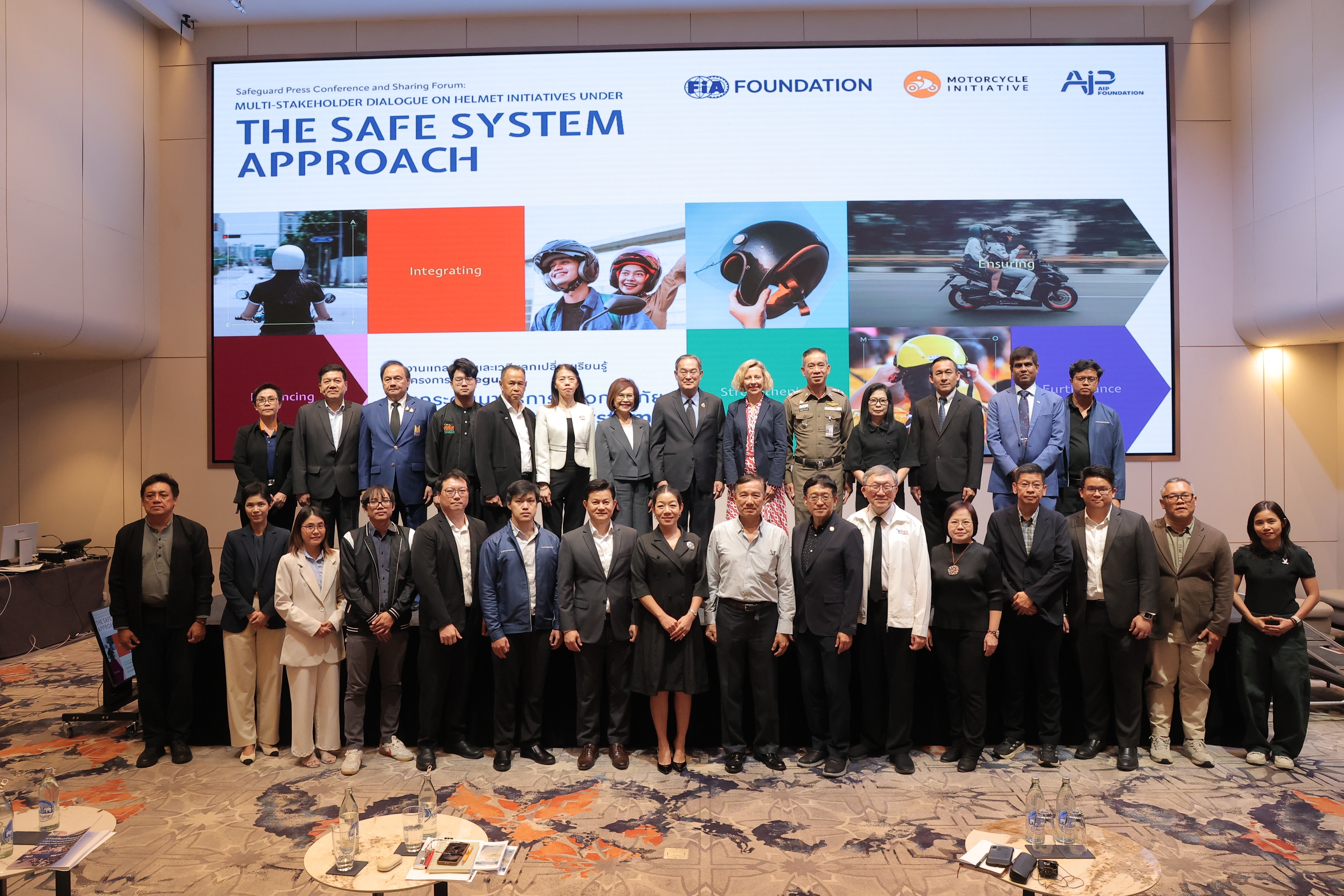
As Thailand continues to face significant road safety challenges, the Safeguard: Helmet Advocacy Initiative has released a forecast revealing the economic and human potential of a nationwide helmet safety intervention. Data from a new impact assessment indicates that a comprehensive three-year implementation of the initiative could save 1,162 lives and prevent nearly 63,000 head injuries nationwide.
Thailand remains one of the deadliest countries for road users, with motorcycle-related deaths accounting for the vast majority – over 83% – of traffic fatalities. Head injuries cause 79% of these motorcycle-related deaths, yet helmet usage rates have stagnated at approximately 44% over the last decade.
New economic modeling by Dr. Manasigan Kanchanachitra, Associate Professor at the Institute for Population and Social Research, Mahidol University, utilizing Thailand Development Research Institute (TDRI) loss value assessments, highlights the staggering financial burden of these preventable tragedies. By 2026 inflation-adjusted standards, the cost per fatality is estimated at 8.84 million THB, while each serious injury costs the nation approximately 2.65 million THB.
The Safeguard Initiative—a multi-sector coalition including the FIA Foundation and AIP Foundation)—has launched a joint 2026-2028 Action Plan to bridge the gap between existing policy and real-world compliance.
“Wearing a quality helmet, properly worn, is the most effective way to save motorcyclists' lives, reducing the risk of death by up to 6 times and the risk of serious head injury by over 70%. While Thailand has helmet laws, they need to be communicated, implemented and enforced clearly and consistently to change behaviour on the streets,” said Agnieszka Krasnolucka, FIA Foundation Programmes Director. “The Safeguard Initiative brings together evidence, government leadership, and private sector responsibility to help close the gap between legislation and the current status quo to deliver lasting road safety change.”
The Action Plan is built on four key strategies identified through a comprehensive Landscape Analysis conducted by non-profit AIP Foundation: helmet standards improvement, market surveillance, law enforcement, and public awareness. Specific activities include:

Ratanawadee H. Winther, Chairperson of AIP Foundation Thailand, presents at the Safeguard Press Conference and Sharing Forum.
“Ensuring road users are wearing safe and affordable helmets is one of the most effective and accessible ways to save lives on Thailand’s roads,” said Ratanawadee H. Winther, Chairperson of AIP Foundation Thailand. “This initiative reflects a shared commitment to move from policy on paper to a multi-billion baht impact on our economy and, more importantly, our families.”
If successfully implemented, the 3-Year National Forecast (2026–2028) predicts impactful changes:
The initiative begins with a short-term intensive law enforcement phase from May to July 2026 in Khon Kaen and Chonburi. This 90-day pilot alone is expected to prevent 185 head injuries and save 537 million baht in economic costs, serving as a proof-of-concept for the national rollout.
The Safeguard Initiative emphasizes that sustainable improvements require coordinated action across regulation, manufacturing, and distribution. By aligning with the World Health Organization’s goal to reduce road injuries and fatalities by 50% by 2030, Thailand is positioning itself to transform its roads from some of the world's deadliest to a model of safe, sustainable mobility.
Together, we can build a world where every person can move safely, fairly, and freely. Join us in delivering sustainable and equitable mobility to communities around the world by donating today.




Stay informed with our latest mobility highlights every month!