Loading...

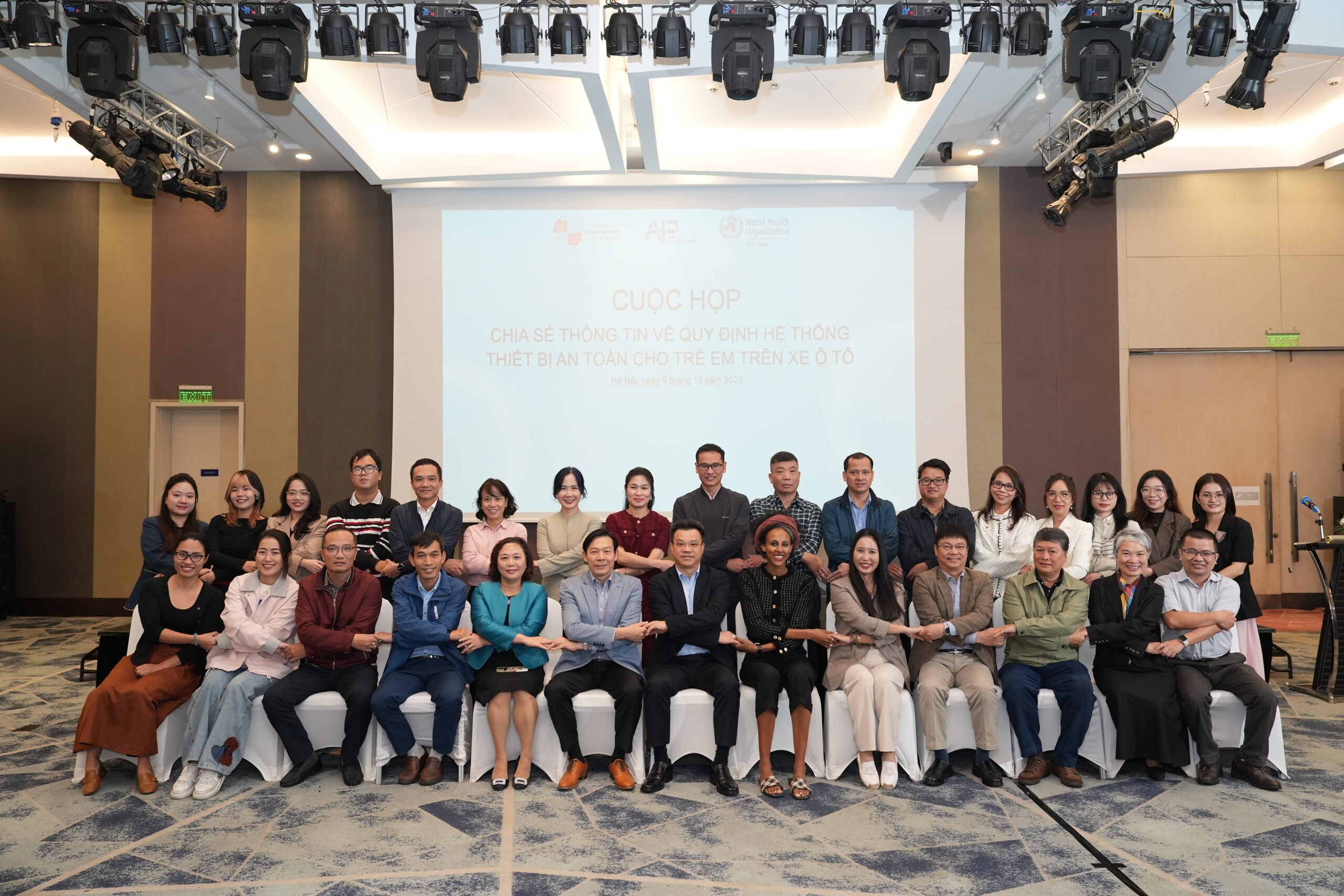
AIP Foundation and the World Health Organization Viet Nam co-hosted a workshop on child restraint systems (CRS) – also known as child car seats – in Ha Noi today, aiming to reduce child injuries and deaths on the road.
The workshop was supported by the Global Road Safety Partnership (GRSP) and the Global Health Advocacy Incubator (GHAI), with generous funding from the Bloomberg Philanthropies Initiative for Global Road Safety (BIGRS).

Madam Meheret Melles-Brewer - WHO Việt Nam
In June 2024, the National Assembly approved the Law on Road Traffic Order and Safety, a milestone that, for the first time, mandates the use of CRS for children who are under 10 years old and under 135cm tall, traveling in cars.
Every year in Viet Nam, 2000 children and young people tragically die on the roads, equivalent to about five a day. Road crashes are a leading cause of death for children in Viet Nam. CRS have been shown to reduce 50% – 80% risk of injury and 47% – 70% risk of deaths amongst infants and child passengers. They are an essential part of the Government’s commitment to reduce child road injuries and deaths.
While this legislation represents a major step forward for child road safety, public awareness and CRS usage remain very low. Many parents are unaware of both CRS and the upcoming legal requirement.
The workshop aims to help bridge this gap by planning how we can further enhance understanding of the new regulation, addressing parental concerns, and strengthening multisectoral coordination to support effective implementation nationwide. The workshop also served as a platform for government agencies, experts, the private sector, and the media to coordinate efforts and enhance public awareness.
Key topics covered during the workshop included:
The event brought together government agencies including the National Traffic Safety Committee, Vietnam Register, Ministry of Health, Ministry of Public Security, Ministry of Construction, academic institutions, civil society organizations, the private sector, and international partners, to coordinate implementation and public awareness efforts ahead of the new regulation taking effect on 1 January 2026.
“This regulation reflects Viet Nam’s strong commitment to protecting children on the roads. Child restraint systems are proven to save lives. WHO will continue to work closely with national partners to strengthen public awareness, and support implementation efforts to ensure these measures translate into real safety gains for Viet Nam’s youngest and most vulnerable road users,” said Dr Angela Pratt, WHO Representative to Viet Nam.
“This new regulation marks a major advancement for child road safety in Viet Nam, but families must understand not onlywhychild restraints matter, but alsohowto use them correctly. Many parents still believe that holding a child in their arms is safe enough, and that mindset needs to be changed. By working with WHO Viet Nam, the National Traffic Safety Committee, and partners, the gap between policy and daily practice is being bridged—ensuring that CRS products are available, affordable, and trusted by parents across the country,” said Sir Greig Craft, President of AIP Foundation.
“Child safety on every trip is not only a legal responsibility, but also a moral responsibility of every adult. Each safety device, each action of ours today can be a decisive factor in protecting the life of a child tomorrow. I believe that, with the synchronous participation of ministries, departments, localities, the support of international organizations, and the spirit of close cooperation of people, businesses, and the whole society, regulations on child restraint systems will soon come to life and promote practical effectiveness,” said Mr Le Kim Thanh, Executive Vice Chairman, National Traffic Safety Committee.
Together, we can build a world where every person can move safely, fairly, and freely. Join us in delivering sustainable and equitable mobility to communities around the world by donating today.



Stay informed with our latest mobility highlights every month!